Plasma consulting
From idea to commercialization: technical diagnosis, feasibility validation on your own parts in our facilities, and support through to the industrialization of the process.
An engineer replies within 48 business hours. The first technical assessment is free and without commitment — and if plasma is not the right answer to your problem, we say so at the diagnosis stage.
Business-hours reply time, from an engineer — not from a sales desk.
Application families covered: adhesion, wettability, cleaning, thin film, anti-fog, sealing.
Industrial sectors supported, from medical devices to aerospace.
Is this your case?
Consulting projects almost always start from a production symptom, not from an interest in plasma. If one of these sentences could come out of your shop floor, the rest of this page is for you.
“My paint peels off polypropylene.”
Polyolefins have a surface energy too low for paint or ink to hold. See the adhesion application →
“My bond holds at assembly, then fails in ageing.”
A poorly prepared surface gives misleading initial adhesion. We measure how the bond holds over time, not just on the first try.
“I want to remove a solvent-based primer from my line.”
Atmospheric plasma replaces a chemical step with a dry one — no VOCs, no drying time. Understand the process →
“My current supplier does not document their process.”
Without parameters or a control method, you cannot defend the process in a customer audit. Every project is delivered documented.
“It works in the lab, not at line speed.”
That is what the integration stage is for: tuning parameters until the process is stable at your real throughput.
“I'm told plasma would fix this. I want it verified.”
That is exactly what the diagnosis produces: a reasoned verdict, before any equipment investment.
None of these match? Write anyway. A first technical read costs nothing, and we do sometimes point people towards something other than plasma.
From first email to industrialized process
Four stages, each with a defined deliverable and a clear contribution from your side. You can stop at the end of any one of them.
-
You write to us
Free · 48 hAn email, a call or the form. Describe your part and your objective, even roughly: an engineer answers you, not a sales desk.
You walk away withA first technical read of your case.
From your sideNothing. It is free and without commitment.
-
Diagnosis
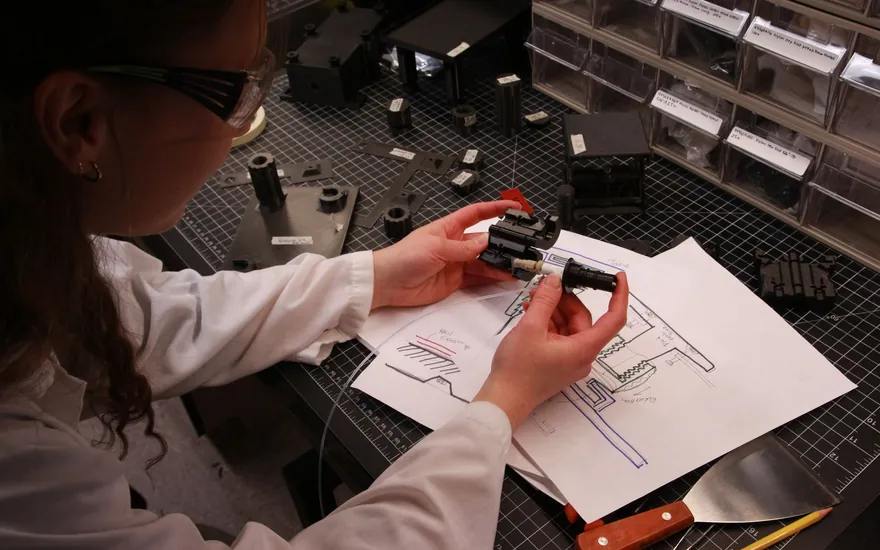
Quote after reviewWe work through your material, your objective (adhesion, wettability, coating) and your production constraints.
You walk away withA feasibility report: what plasma can do to your surface, and what it will not do.
From your sideYour material datasheet and, if possible, a few photos of the part.
-
Validation
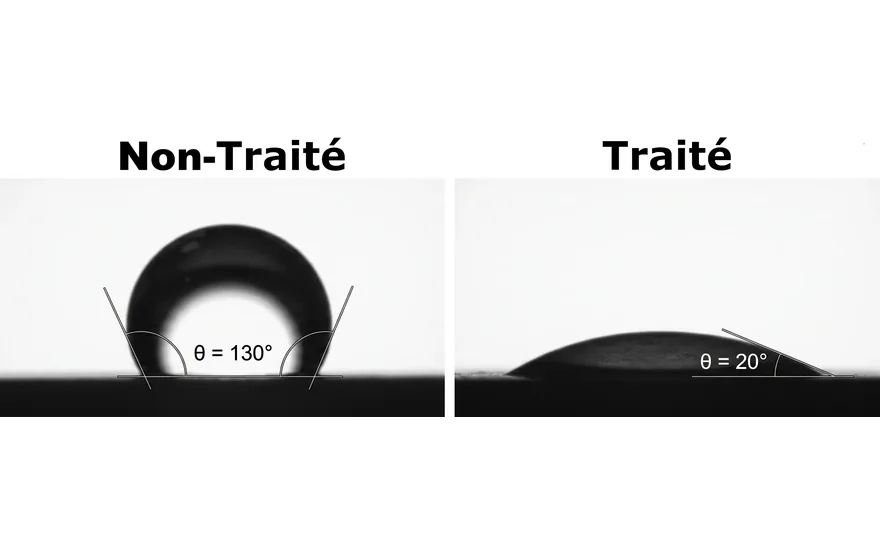
On your samplesWe treat your parts in our facilities, characterize the surfaces (contact angle, surface energy, ageing of the effect) and document the process.
You walk away withA characterization file: before/after measurements, ageing of the effect, retained parameters.
From your side3 to 5 samples representative of your production.
-
Integration
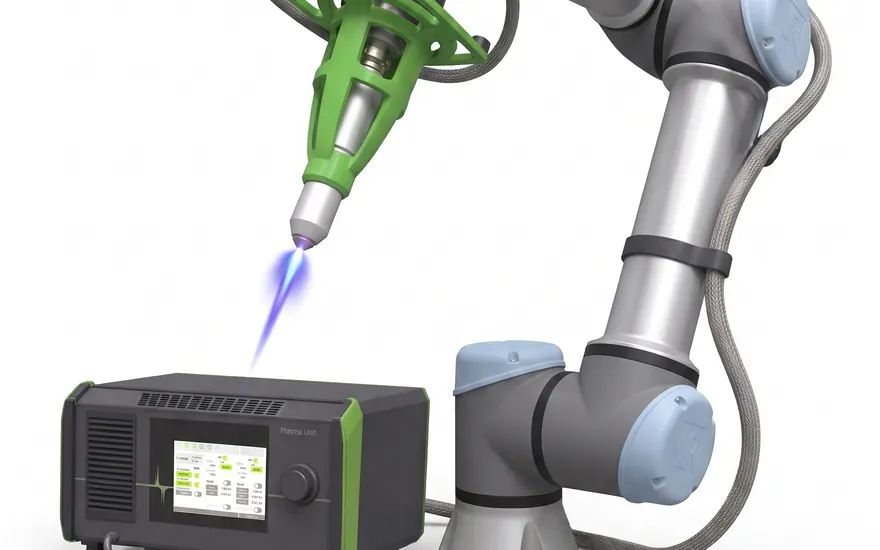
On your lineWe integrate the equipment into your production line and tune the parameters until the process is optimal and ready for industrial throughput.
You walk away withA documented, parameterized process, ready for your customer audits.
From your sideA line-stop window of roughly two days for installation and setup.
If plasma is not the right answer to your problem, we tell you at stage 01.
Documents, not impressions
Each stage ends with a document you keep, that you can hand to your engineering management and file into a qualification package.
Feasibility report
- The material analysed and its starting surface condition
- The surface mechanism targeted: activation, cleaning, coating
- A reasoned verdict: plasma is suitable, or it is not
- What plasma will not do to your part
- The alternatives, where better ones exist
Characterization file
- Contact angle measured before and after treatment
- Surface energy in mN/m
- Ageing of the effect: how fast the activation decays
- Retained process parameters: power, gas, speed, distance
- The measurement method used, reproducible at your site
Process file
- Equipment layout on your line
- Required utilities: power, gas, extraction
- Achievable throughput at the station
- Operating procedures and quality control plan
- Documentation level adapted to regulated markets
Who we work with
Our consulting projects draw on a network of research partners and public institutions. Confidential engagements are not listed here.







Who we are and where the team comes from →
Press coverage and awards →
What it costs
The initial exchange and the first technical assessment are free and without commitment. You describe your part and your objective, we tell you what plasma can do — and what it will not do.
A costed estimate is provided after the diagnosis stage, once the scope is known. It too comes without commitment.
You are never obliged to move to the next stage. Many projects stop after validation, with a file in hand and an informed investment decision.
- Measure it yourself Test inks give you the surface energy of your parts in seconds, without us. See the product range →
- Have us test your parts We treat your samples in our facilities in Quebec City, with no equipment purchase on your side. Send samples →
- Assess a piece of equipment Once the process is validated, we look at which reactor matches your throughput and your part. Have a reactor assessed →
- Industrialize Full support, from diagnosis to commissioning on your line.
What people ask before starting
Is the first assessment chargeable?
No. The initial exchange and the first technical assessment are free and without commitment. You describe your part and your objective, we tell you what plasma can do — and what it will not do.
A costed estimate is provided after the diagnosis stage, and it too comes without commitment.
Is my material compatible with plasma?
The vast majority of polymers, metals, glasses and composites can be treated with DBD plasma. The surest way to find out is to send us a description of your part and your objective: we come back with a first assessment and, if needed, treat a sample in our facilities.
What happens if plasma is not right for my case?
We tell you at the diagnosis stage. The feasibility report explicitly states what plasma will not do to your surface, and why. You will have committed nothing beyond the initial exchange, which is free.
It is also in our interest: a process sold on a false promise always comes back, and costs more than the engagement it brought in.
Can you treat my parts before I buy equipment?
Yes. Our facilities in Quebec City can treat your parts as a service, long enough to validate the process and build your qualification file. It is often the best way to start a project without committing to capital equipment.
Do my parts and data stay confidential?
Yes. Your parts, your datasheets and the description of your process do not leave our team. A non-disclosure agreement can be signed before any technical exchange, on request — just mention it in your message.
What documents do you provide for my customer audits?
Every project is delivered with a documented process file: plasma parameters, characterization methods, validation results and operating procedures. For regulated markets (medical, food), we adapt the level of documentation to your sector's requirements.
How many samples do you need for validation?
Three to five representative samples are enough. One point matters: they must come from the same batch and the same process as your real parts — demoulding, release agent, cleaning and storage included. A "clean" sample prepared for the occasion gives measurements that will not transfer to your production.
How long does it take to integrate a reactor into my line?
The lead time depends on how complex the integration is. For a standard reactor, allow roughly 1 to 3 months between order and commissioning. For a custom reactor, the schedule is framed at design stage and firmed up in the specification.
Go further
If you are still working out what plasma can do for your surfaces, start here. No form, no sign-up.
Plasma, without the jargon
The process explained simply, and how it acts on a surface.
Atmospheric or vacuum
The two process families, their limits, and how to choose.
Plasma in your industry
Seventeen sectors, with the constraints and uses specific to each.
The equipment range
Torches, curtains, reactors, coating stations and custom workstations.
Tell us about your part
Even roughly. An engineer answers you within 48 business hours, free of charge and without commitment.